.jpg)




How Sport Bike Insurance Works (And Why Pay Per Mile Changes the Math)
Sport bike insurance is expensive by default. Here is why rates run high for sportbike riders, and how pay per mile motorcycle insurance changes the cost for weekend and low-mileage riders.
Written by

Team VOOM
How Sport Bike Insurance Works (And Why Pay Per Mile Changes the Math)
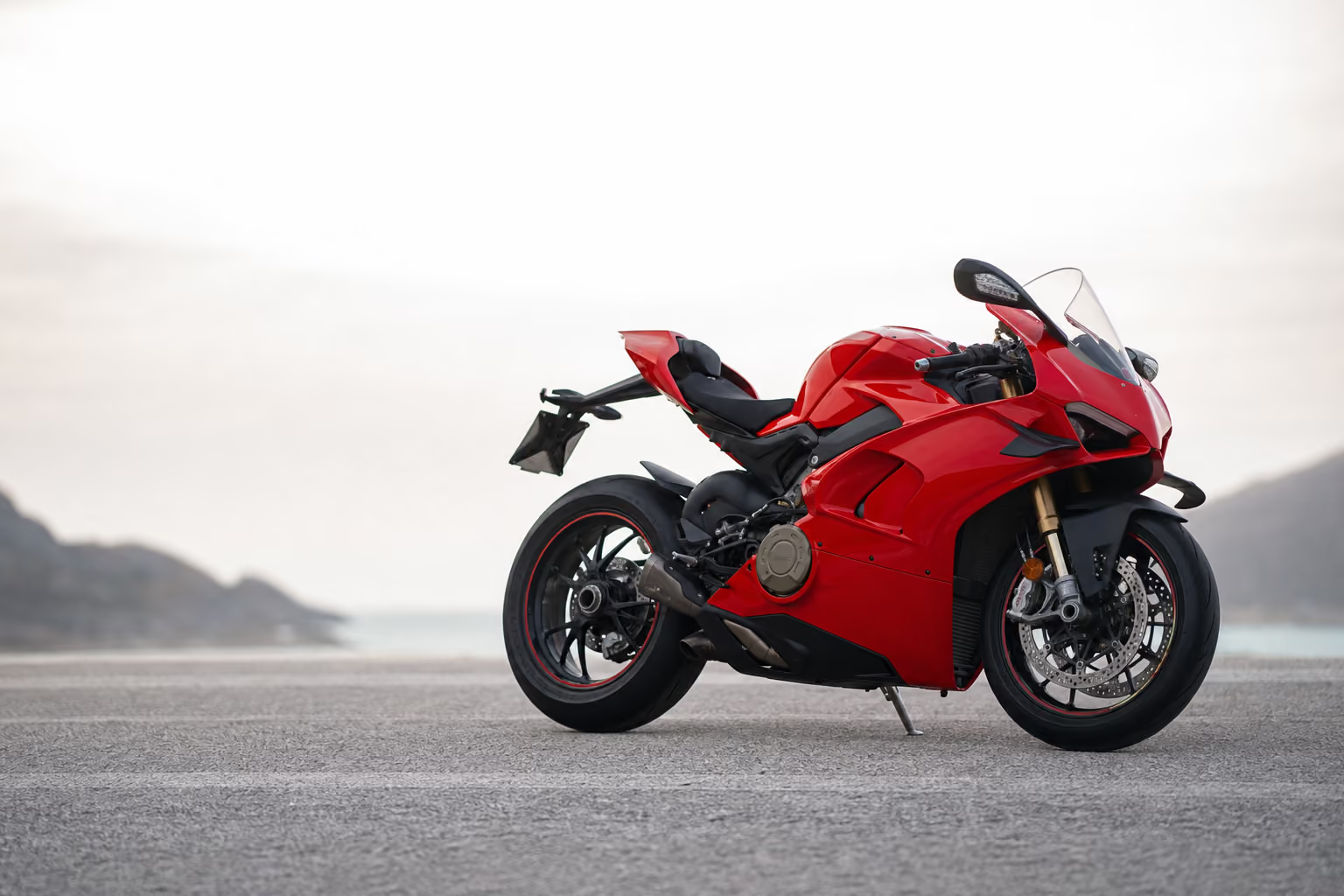
If you ride a sport bike, you already know the insurance sticker shock. A 21-year-old on a Kawasaki Ninja gets quoted $500 a month. A seasoned rider adding a ZX-6R to the garage watches rates jump. Sport bike insurance costs more than almost any other motorcycle category, and the math rarely feels fair when the bike sits parked most of the week.
Here is why rates run high, and how a different approach to coverage can actually work in your favor.
Why Sport Bike Insurance Costs More
Insurers price risk based on what actually happens with a given type of bike. Sport bikes get ridden fast, often by younger and newer riders, and they are involved in a disproportionate share of accidents. That data gets baked into every quote, regardless of your personal riding habits.
What that means in practice: even if you are a careful rider who only takes your sportbike out on dry weekends, you are still paying the same flat rate as someone who puts 10,000 miles on the same model every year. Traditional sport bike insurance charges you for the risk category, not for how you actually ride.
That is a significant problem for weekend riders, occasional riders, and anyone who keeps a high-performance bike as one of several machines in rotation.
The Case for Pay Per Mile on a Sport Bike
Pay per mile motorcycle insurance flips that logic. Instead of paying a flat annual premium based on your bike's risk category, you pay a base monthly rate plus a small fee for each mile you actually ride. Ride 200 miles in a month, pay for 200 miles.
For sport bike owners who ride on weekends, or who store the bike through part of the year, this changes the total cost substantially. You are not subsidizing a riding pattern you never have.
The other piece that gets missed: your coverage does not lapse. With a flat-rate policy, some riders cancel or downgrade coverage when they are not riding, then forget to restore it before the season starts. With pay-per-mile, the policy stays active. In months when the bike barely moves, you just pay very little.
What to Know Before You Switch
Not all bikes qualify under every insurer. VOOM covers cruisers, sport bikes, and touring bikes, and the model works the same across categories.
A few things worth understanding before switching:
Your base monthly rate is set based on factors like your state, your riding history, and the bike itself. The per-mile portion then adds to that. For low-mileage sport bike riders, the combined total is usually well below what a flat-rate policy charges annually.
If you also own a cruiser or a touring bike alongside your sport bike, pay-per-mile tends to make even more sense. You are spreading real riding miles across multiple bikes, and each one gets priced accordingly.
The Bottom Line
Sport bike insurance is expensive by default because it is built on category averages. If you are not an average sport bike rider, a flat rate will consistently overcharge you.
Pay-per-mile puts the actual cost in line with actual use. It is a straightforward model, and for weekend riders and multi-bike owners, it is usually the cheaper path.
Get a quote and see what your mileage actually works out to at voominsurance.com.